
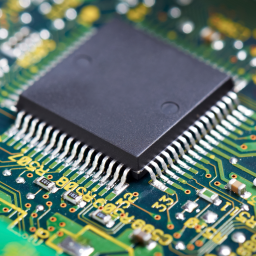
This is an EBAZ4205, control boards that were used in some (now uncompetitive) bitcoin miners. Got it off of a shady website called “Aliexpress” that some of you mightve heard of. Let us pray to the computer gods that the AI rush will leave us with similarly sweet hardware sold as scrap.
2 x Cortex A9 in a Zynq 7010 SoC along with FPGA fabric. 256MB DDR3L RAM and 128MB NAND flash. Ethernet PHY.
Pictured are also a STM32 bluepill that I’m using as a debug probe (acts as XVC and bit-bangs JTAG. Projects exist to do this with ESP32 and Raspberry Pi pico too.) since FTDI JTAG probes are unnecessarily expensive. Temporarily I’m powering it over the UART-USB adaptor until I get JST connectors and an AC adaptor.
These boards aren’t exactly niche, but I thought I’d share it for those who didn’t know they exist.
I’m planning to learn some embedded linux, driver development and write some IP core that uses ethernet (which is attached to the FPGA fabric and is really the only peripheral on this board. Proper devboards wouldve come with hdmi and similar fun stuff).
You must log in or register to comment.
How many logic elements?
Is this a learning platform for you, or do you have an application in mind?
Very much a learning platform, I’ll be doing simple exercises with features I’m curious about. I’ve never used anything like a Zynq before.
I do eventually want to build up to a more complicated project using the stuff I listed in the post, but I haven’t decided on what it should be yet. Would love to hear suggestions.
If I understand correctly, the main utility of this would be a router/firewall?
Do you mean this specific board or Zynq SoCs in general?
I was thinking of what was in the realm of possibility for that device, but does it diverge much from a generic hypothetical SoC?
I want to write a helpful comment, but I also couldn’t figure out where to begin. So I hope you won’t take it the wrong way if I’ve written some obvious stuff you already know about.
The FPGA fabric on the chip means that, like FPGAs in general you really can do anything. For it to make economic sense it would have to be whatever needing the “performance” (in terms of parallelism, low-latency, etc.) you might otherwise design a chip for. What Zynq chips bring is ARM CPUs, memory controllers, etc. along with the FPGA fabric (you’d otherwise have to implement softcore CPUs on the FPGA) So you can have something like Linux or an RTOS running on the CPUs, and directly interface with the hardware you’ve designed on the FPGA fabric.
As for application areas, it’s really high “perfomance” stuff. Medical devices, measuring instruments, space, defense. Specific examples I’m aware of: CAT scanners, oscilloscopes, radar, UAVs, firewalls (like you mentioned. maybe routers too, but I haven’t looked into it).
Those are the industrial applications I’m aware of. I’m not very familiar with hobbyists but I’ve seen people do weird but interesting stuff like implementing emulators for retro consoles (so instead of a software emulator it’s in hardware).
Zynq chips come in various flavors. It goes without saying that mine is a low end devices without high-speed transcievers and the like, so you couldn’t do the fancy stuff I listed. But I think it’s good enough to get the basics down and do some fun stuff.

