‘Religion has mastered one remarkable skill: surviving without evidence. For thousands of years, gods have been proposed, worshiped, feared, obeyed, and defended yet never independently verified. This is not a minor oversight. In every other domain of human knowledge, claims without evidence are discarded. Only in religion are they protected, revered, and shielded from scrutiny.
Atheism begins with a simple, unromantic question: Where is the evidence? Not the feelings, not the traditions, not the anecdotes but the verifiable, testable, independently confirmable evidence. When that question is asked honestly, belief systems that rely on revelation and authority rather than observation begin to wobble.
Faith is often praised as a virtue. In practice, it is an admission of ignorance dressed up as confidence. Faith exists precisely where evidence does not. No one has “faith” that gravity works or that germs cause disease. Those are facts established through experiment and replication. Faith only enters when knowledge fails.
If faith were a reliable path to truth, different religions would converge on the same conclusions. Instead, they contradict one another on every fundamental claim how many gods exist, what they want, who they favour, and what happens after death. Billions of believers, thousands of gods, zero consensus. Why should we treat any one of them as special?
A popular apologetic claim is that religion “invented” science or was its primary driver. History tells a messier story. Scientific progress emerged when thinkers began questioning authority including religious authority and insisting on evidence over scripture.
Copernicus, Galileo, Darwin, and countless others faced religious resistance, not encouragement. The Catholic Church condemned heliocentrism. Protestant leaders rejected evolution. Even today, creationism and intelligent design attempt to smuggle theology into science classrooms despite overwhelming biological evidence to the contrary.
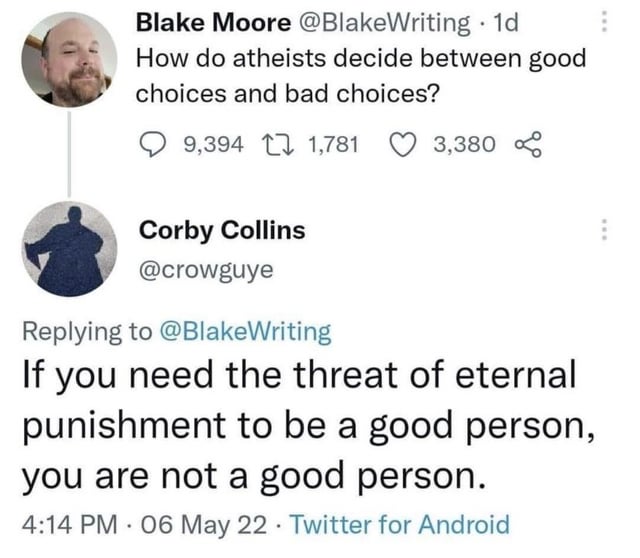
Another common claim is that without God, morality collapses. This argument misunderstands both morality and human behaviour. Moral systems existed long before monotheistic religions and vary widely across cultures. Empathy, cooperation, and fairness are products of social evolution, not divine command.
If morality truly came from God, believers would behave demonstrably better than nonbelievers. They do not. Study after study shows no consistent correlation between religiosity and moral behaviour, and some of the least religious countries score highest on measures of social trust, equality, and well-being .
Prayer Fails the Most Basic Test.
Prayer is often described as powerful, transformative, and effective until it is tested. Controlled studies consistently show that intercessory prayer has no measurable effect on recovery, illness, or outcomes. In some cases, being told you are prayed for worsens outcomes due to performance anxiety.
If prayer worked the way believers claim, hospitals would replace ICUs with chapels. They do not. Why? Because when lives are on the line, even believers trust medicine, not miracles.
Why is scepticism encouraged everywhere except religion? Why are children taught to question advertisements, politicians, and strangers but not gods? Why is doubt framed as intellectual honesty in science and rebellion in theology?
What would happen if religious claims were held to the same standards as scientific ones? If holy books were treated like hypotheses? If miracles required evidence before belief?
Would anything remain? Atheism Is Not Nihilism It Is Responsibility.
Atheism offers no cosmic rewards, no eternal surveillance, no divine forgiveness loopholes. That is precisely its strength. Meaning is not handed down; it is constructed. Morality is not outsourced; it is owned. There is no god to blame, no plan to hide behind.
If this life is the only one, we know we have, then cruelty is less excusable, not more. Kindness matters now. Justice matters now. Truth matters now.
And that is what makes atheism unsettling not that it removes meaning, but that it removes excuses. If faith is a reliable path to truth, why does it produce contradictory conclusions?
Why are religious claims exempt from the standards applied to every other claim?
If morality comes from God, why do moral intuitions change over time and culture?
What belief would you abandon if evidence disproved it and why should religion be different?’


‘Religion has mastered one remarkable skill: surviving without evidence. For thousands of years, gods have been proposed, worshiped, feared, obeyed, and defended yet never independently verified. This is not a minor oversight. In every other domain of human knowledge, claims without evidence are discarded. Only in religion are they protected, revered, and shielded from scrutiny. Atheism begins with a simple, unromantic question: Where is the evidence? Not the feelings, not the traditions, not the anecdotes but the verifiable, testable, independently confirmable evidence. When that question is asked honestly, belief systems that rely on revelation and authority rather than observation begin to wobble. Faith is often praised as a virtue. In practice, it is an admission of ignorance dressed up as confidence. Faith exists precisely where evidence does not. No one has “faith” that gravity works or that germs cause disease. Those are facts established through experiment and replication. Faith only enters when knowledge fails. If faith were a reliable path to truth, different religions would converge on the same conclusions. Instead, they contradict one another on every fundamental claim how many gods exist, what they want, who they favour, and what happens after death. Billions of believers, thousands of gods, zero consensus. Why should we treat any one of them as special? A popular apologetic claim is that religion “invented” science or was its primary driver. History tells a messier story. Scientific progress emerged when thinkers began questioning authority including religious authority and insisting on evidence over scripture. Copernicus, Galileo, Darwin, and countless others faced religious resistance, not encouragement. The Catholic Church condemned heliocentrism. Protestant leaders rejected evolution. Even today, creationism and intelligent design attempt to smuggle theology into science classrooms despite overwhelming biological evidence to the contrary. Another common claim is that without God, morality collapses. This argument misunderstands both morality and human behaviour. Moral systems existed long before monotheistic religions and vary widely across cultures. Empathy, cooperation, and fairness are products of social evolution, not divine command. If morality truly came from God, believers would behave demonstrably better than nonbelievers. They do not. Study after study shows no consistent correlation between religiosity and moral behaviour, and some of the least religious countries score highest on measures of social trust, equality, and well-being . Prayer Fails the Most Basic Test. Prayer is often described as powerful, transformative, and effective until it is tested. Controlled studies consistently show that intercessory prayer has no measurable effect on recovery, illness, or outcomes. In some cases, being told you are prayed for worsens outcomes due to performance anxiety. If prayer worked the way believers claim, hospitals would replace ICUs with chapels. They do not. Why? Because when lives are on the line, even believers trust medicine, not miracles. Why is scepticism encouraged everywhere except religion? Why are children taught to question advertisements, politicians, and strangers but not gods? Why is doubt framed as intellectual honesty in science and rebellion in theology? What would happen if religious claims were held to the same standards as scientific ones? If holy books were treated like hypotheses? If miracles required evidence before belief? Would anything remain? Atheism Is Not Nihilism It Is Responsibility. Atheism offers no cosmic rewards, no eternal surveillance, no divine forgiveness loopholes. That is precisely its strength. Meaning is not handed down; it is constructed. Morality is not outsourced; it is owned. There is no god to blame, no plan to hide behind. If this life is the only one, we know we have, then cruelty is less excusable, not more. Kindness matters now. Justice matters now. Truth matters now. And that is what makes atheism unsettling not that it removes meaning, but that it removes excuses. If faith is a reliable path to truth, why does it produce contradictory conclusions? Why are religious claims exempt from the standards applied to every other claim? If morality comes from God, why do moral intuitions change over time and culture? What belief would you abandon if evidence disproved it and why should religion be different?’