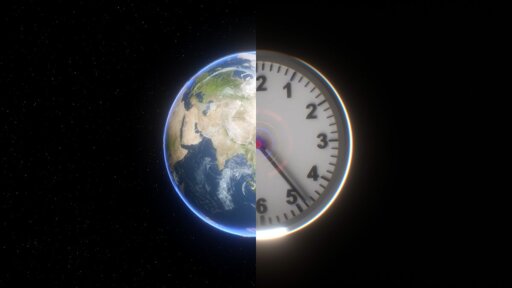
Today an international group of scientists, diplomats, and timekeepers voted to end the leap second, which has been keeping Coordinated Universal Time (UTC) aligned with the time according to Earth’s rotation (UT1) within one second of difference.
A new system, called the “leap hour,” will allow the Earth’s rotation and official time to fall out of alignment by a full hour
It’s funny that the easiest way to break infrastructure around the world is not to be a world class hacker, but to ask computers to simply subtract a second from their clocks.
For a computer, it’s as confusing as the international date line for people
Yes, you’re reading this right. In a 50-100 years the difference between UTC and UT1 will grow to one minute. In about 6000 years it can be even one hour and we will have to change our schedules.
They never give us enough time, you know?
At least we’ll get an extra hour here in several thousand years.
The year 8k problem.
Remember to future-proof your code against the year 8027 problem.
I feel like the “problem” here is that we won’t remember to do this in 6000 years, and the habit of doing it each leap second keeps us maintaining time, whereas the leap hour will just fall into forgotten history.
So essentially I feel like with this announcement, scientist are basically saying “balls to this, we’re done here”.
Maybe we should build a scary-looking shrine with pictograms to remind our descendants of the issue and warn them to keep track
Our descendants: Makes a religion around it or studies it as an unexplainable artifact
So in 144000 years we either skip a leap year or don’t skip one we usually would, whichever it is
It says “more than 1,000 years”, how’d you get 6,000?
1 minute every ~100 years, 60 minutes in an hour. Why 1000? 🤷
Basically they’re just starting a 1000-year pause in the technical inconveniences connected with occasional 1-second corrections - which should be long enough for somebody else to figure out a better solution.
Every dev who has debugged a timestamp bug at 2am is quietly celebrating this. The amount of engineering hours burned on leap second handling in NTP, databases, and distributed systems is staggering, and the ‘smearing’ workarounds were never pretty. I remember reading that a big chunk of notable service outages over the years lined up with leap second insertions, which is exactly the kind of correlation you never want your infrastructure to have with an astronomy committee’s decision. Trading that pain for a drift that only matters centuries out is a genuinely good deal.
Haha, that sounds like procrastination to me.
Ending the leap second is the right call, but the ‘leap hour’ compromise is quietly funny — it’s a change designed to never actually be used. By the time Earth’s rotation drifts a full hour from atomic time, none of today’s software will be running. It’s a way to kick the problem past everyone’s retirement date while technically keeping UTC anchored to the sun.
The messy part is the transition they just voted away from. Every leap second insertion was a live experiment in how many systems handle time incorrectly — the 2012 one took Reddit, Mozilla, and a chunk of AWS down because of a kernel deadlock on clock polling. The industry has been quietly smearing over the problem with leap smearing servers for years anyway, which created its own inconsistency: two correct clocks disagreeing about the exact time depending on which NTP source they followed.
UTC is now UTU - universal uncoordinated time
UtU
eh doesn’t have the appeal like UwU
Good riddance to the leap second — it’s a scheduled outage for distributed systems. The 2017 Cloudflare incident happened purely because some code paths choked when 23:59:60 showed up, and every insertion window means NTP, databases, and financial systems all hold their breath.
The leap hour is a clever deferral though: pushing the correction out roughly a century means nobody running today has to implement anything, and by the time it matters the drift gets handled wholesale instead of one second at a time. Slightly odd that it’s the same diplomatic mechanism as the CGPM voting on measurement units deciding how software keeps time, but the engineering outcome is right.
https://gist.github.com/timvisee/fcda9bbdff88d45cc9061606b4b923ca
If your software is choking on completely expectable events, it it not sufficiently robust.
As you just proved, while it might be possible to write robust software that deals with dates/times, I wouldn’t bet on it, and it’s Definitely not practical to try.
But you are right that leap seconds were common enough to try and handle. There’s a bunch of ways to handle them though, each incompatible with the others.