

9·
2 days agoI had wondered why the original link was to a Reddit post, haha. Thanks for fixing!
She/her
I had wondered why the original link was to a Reddit post, haha. Thanks for fixing!
Direct link to the quoted article: https://theneedling.com/2026/11/05/girls-finally-safe-now-that-they-have-to-show-adult-their-vagina-to-play-school-sports/

The body language of a kitten assessing the situation and going “yeah, I can take her.”
Godspeed, little kitten. Godspeed.

What are the best ways for non-employees to help support this?

Condolences and best wishes from an internet stranger. I’m so sorry for your loss.
I’m not going to say it, I’m not going to say it, I’m not going to say it…
… I’m going to say it. Purrinium sunning.

When a site just won’t cooperate on anything Firefox-based, Vivaldi is my Chromium poison of choice. It also has good privacy features and customization, without the toxic project runners of Brave.

To add on to this: a lot of customers are probably people who have the patience and skill to propogate. (As others have said, propagation isn’t really that hard, so it’s more about patience and time.) At the same time, if you have the patience and skill to propogate a plant and are still at a greenhouse buying plants, it’s probably because you’re specifically looking to buy a plant where someone has already done that work for you. You’re not going to proplift a plant instead of buying it, because you’re there specifically to buy something instead of doing that work.
Propagating plants and growing them from seeds is a longer process that’s prone to failure and can take time. It’s very common for gardeners to propogate/grow from seed some plants while also buying others that are already more mature in order to eliminate that process or because all their tomatoes this year died and they need new ones.
Sure, maybe every now and again you get someone who’s there to buy something else, sees a dropping from a plant they want that they might have otherwise bought, and grabs it, but as you said, that’s really not common enough to cut into their margins. You’re consistently paying for the saved time and effort when buying plants at greenhouses.
Now, if the greenhouse itself makes a habit of taking fallen plant bits to propogate new ones, that does change things a little bit, because you’re taking something they were going to use. But if it’s just going into the mulcher, who the fuck cares.
Oh man, you have no idea. There is SO much in the gardening world about copyrighted seeds and cultivars.
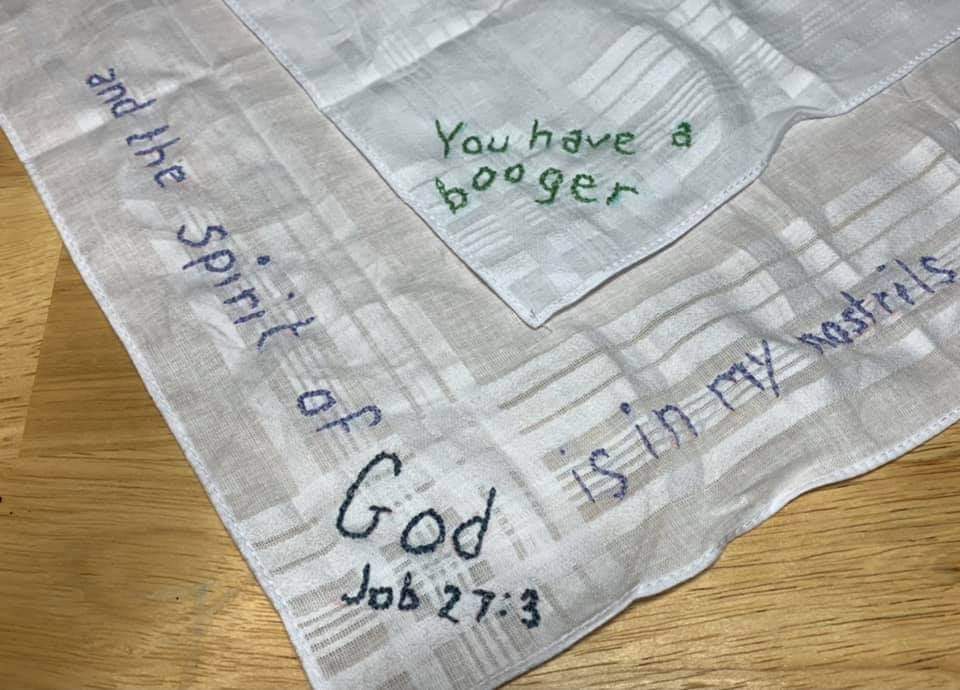
That looks so cool!

I’ll check it out, TY
Out of curiosity, which system?
This is the kind of Opinionated Internet Discourse I want to see more of in the world.
Yeah this is not what feminists meant by “wages for housework.”

When it comes to medicine, it’s best to move slowly and keep things intact, and while AI trained like this does have promise for exactly these sorts of medical purposes, it’s still algorithms outputting stuff which cannot be blindly trusted. But this also isn’t ChatGPT spitting out some idea of bacterial genetic code it generated from predictive text based on the collected works of Michael Crichton. Let’s not spread misinformed panic.

I’ve noticed that as well. Sometimes I have to switch between tabs on Voyager a few times before it starts loading, too.

While risking the disclosure of information about victims, the whistleblower alleged that “staff were instructed to flag any records in which the current President is mentioned.” As previously reported by Raw Story, the materials the FBI turned over to the Department of Justice on March 25, 2025 included “flagged items” that listed “public figures” referenced in the 2006 criminal investigation of Epstein in south Florida and the 2019 investigation in the Southern District of New York.
Some clear priorities here.
My personal favorite is when you think your brain is pronouncing a coherent guess at it until the first time you try to say it aloud and realize your folly.



R o u n