It seems these shared beliefs don’t really contribute to any kind of peace.
I mean, that’s because very few conflicts are fought over religion on its own. It’s usually part of a larger fight, at which point the larger fight will need to be resolved even if both sides believe in similar religions. Besides, since peace is the absence of conflict, it’s always going to be impossible to tell if it contributing to some kind of peace because you can’t know which conflicts aren’t being fought. You can always have more race religion wars.
I think you’re ignoring the importance of religious identity as the definitive motivating factor in a lot conflict, but I agree that sometimes it plays a more minor role.
I mean, examples? Pretty much every ostensibly religious example I can think of off the top of my head is fundamentally driven by something else. Now that doesn’t make religion unimportant in these conflicts, but it’s not definitive and it’s entirely possible and/or likely other fault lines would’ve been found instead.


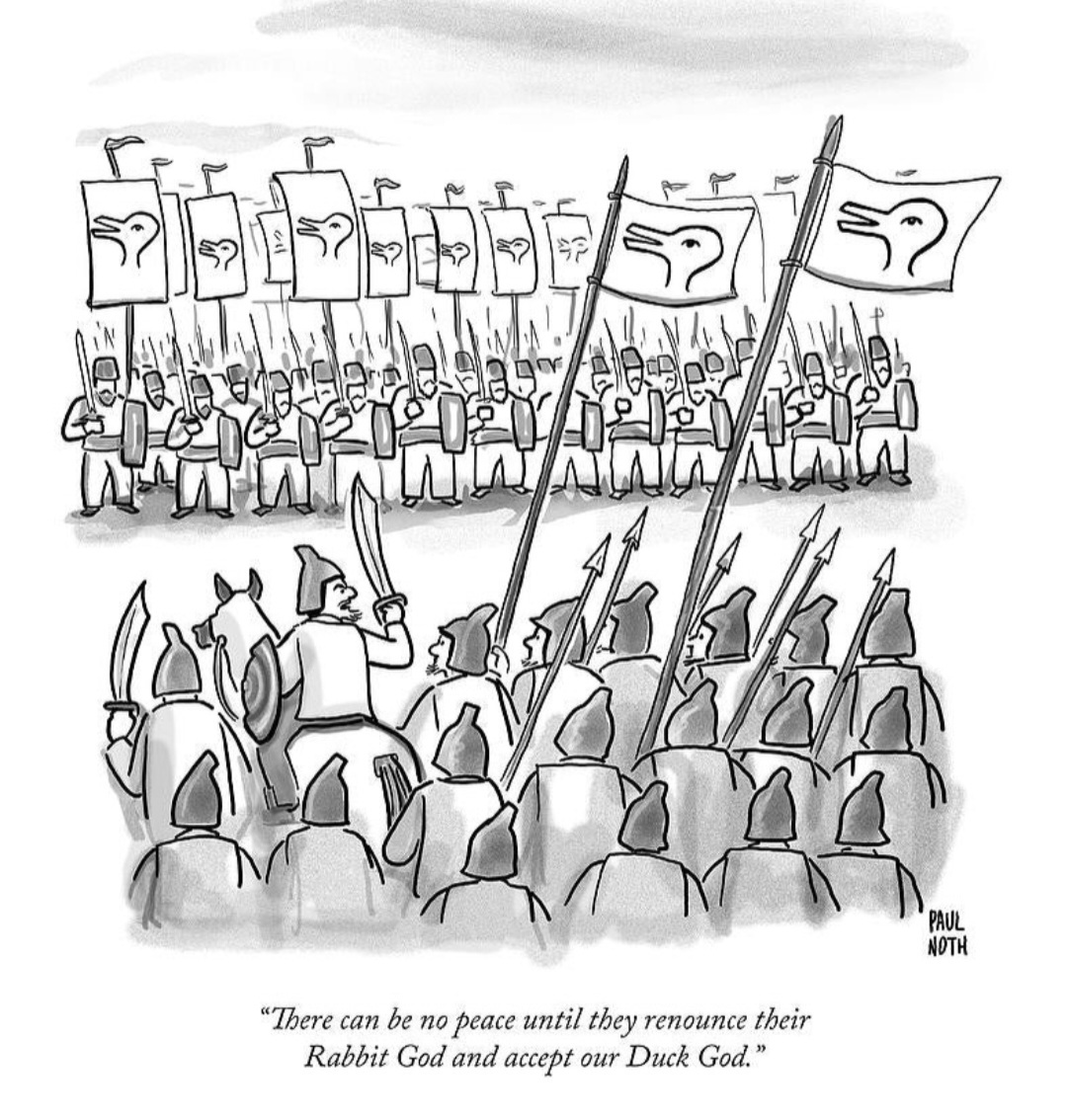
I mean, that’s because very few conflicts are fought over religion on its own. It’s usually part of a larger fight, at which point the larger fight will need to be resolved even if both sides believe in similar religions. Besides, since peace is the absence of conflict, it’s always going to be impossible to tell if it contributing to some kind of peace because you can’t know which conflicts aren’t being fought. You can always have more
racereligion wars.I think you’re ignoring the importance of religious identity as the definitive motivating factor in a lot conflict, but I agree that sometimes it plays a more minor role.
I mean, examples? Pretty much every ostensibly religious example I can think of off the top of my head is fundamentally driven by something else. Now that doesn’t make religion unimportant in these conflicts, but it’s not definitive and it’s entirely possible and/or likely other fault lines would’ve been found instead.
The European wars of religion?